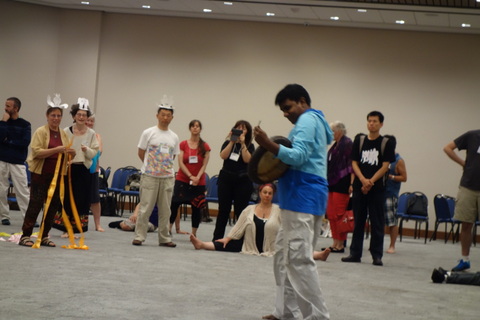
 I have been writing about the conference from the position of one who, although having performed Playback for many years, has attended only two Playback conferences, this being the first truly international one. In contrast, many of those who attended had attended several conferences, and friendships among them may go back scores of years. In writing about the conference I have attempted to listen, and to give voice to a range of beliefs and attitudes. Still, the writing is based squarely in my own experience and thought, and reflects my experience.
There are many forces at play in any international gathering, especially when social change is on the agenda, and this conference was no exception. On the last day of the conference, as so often happens, some of the deep conversations that had alluded us as a group began to take place.
One of those conversations was about economic inequality, and the ways inequality shaped the experiences of those at a conference. Perhaps, more often than we imagine, having, or not having, resources shapes our perceptions and expectations. Sometimes, those with greater resources display their relative wealth in unconscious ways, not realizing that everyday transactions can be demonstrations of power that may shame those with fewer resources. It can be difficult to bear in mind that our attempts to aid too often have the effect of discouraging those we seek to support. Often these miscommunications arise from cultural difference, and the resulting affronts are unintended. At any very diverse conference it is useful to remember that very little is simple, or straightforward, due to economic and cultural variation and complexity between individuals, communities, countries, and regions.
As might be expected, the concerns, and protestations, expressed by participants at the conference were understood by their colleagues in a variety of ways. Some focused on the individual, loosing sight of the ways in which personal statements may reflect the lived experience of a much larger group. Others held the belief the concerns were overstated and, perhaps, not really relevant. Still, many participants listened carefully, and held the experiences of their colleges thoughtfully, with empathy and compassion.
Although the sudden forefronting of issues of inequality, Aboriginality, and shame occurred at the conclusion of the conference, it provided an opportunity for much sharing and discussion. Many people expressed the hope that we might all learn to make more room for what is uncomfortable, might be more open to the needs and aspirations of our less affluent colleagues, and might all become more cross-culturally competent. Those are indeed lofty aspirations, hopes very much congruent with the values inherent in Playback.


Leave a reply to Andrea Stephenson Cancel reply