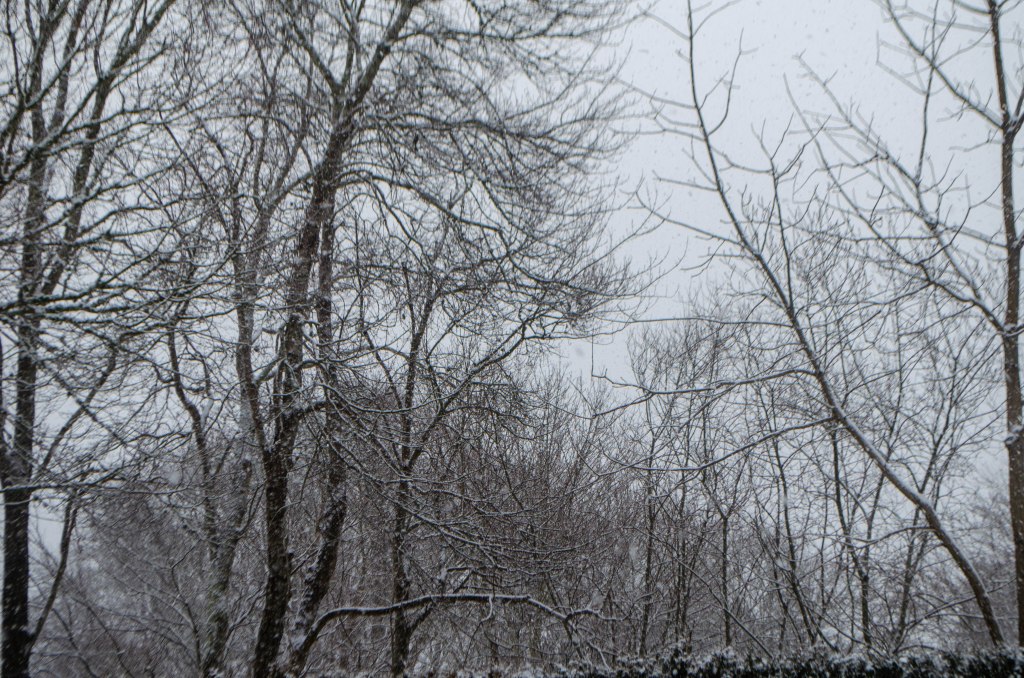
We finally had a significant snow and the light this morning is that perfect February bright, long shadows offering contrast and blue being the predominant hue. Its cold by local standards which means it is more or less seasonable which is now several degrees warmer than the long term average.
I’ve been thinking about ambivalence and irreconcilable differences, and how they tend to shape each other over time. When I was a practicing therapist I often met with couples who had arrived at an impasse and were looking for a way to move past it, or not. Some relationships seem to be held together by the very irresolvable differences that tear other relationships apart.
Ambivalence plays into these enemas when one party or both find themselves caught between two more or less equivalent, if seemingly irreconcilable, desires. Ambivalence then becomes a very firm glue, binding one or both parties and preventing any resolution of the problems at hand.
Perhaps the foremost challenge facing children in abusive families is finding a way to both feel rage at their abuser, and as the abuser is often their primary caregiver, to muster enough denial to keep loving that crucial other. Often this is a dilemma that remains unresolvabled and unconscious well into adulthood. The impact of this quandary is large and far reaching. Adults in ambivalent relationships may frame their experience in similar terms: they both love and feel rage at their partner, and can find no way to reconcile these seeming opposites.
As early as the 1970’s psychoanalytically oriented theorists were applying these notions to the environmental crisis. Extending the metaphor of the dangerous but loved parent (back then mostly moms) to the natural world, these theorists posited that the individual might find themselves deeply entrapped in experiencing the world as both loving and harmful, then become paralyses to act in useful ways. Add the realization that we are literally “shitting” on the mother and things spin quickly out of control.
When we humans become mired in ambivalence and irreconcilable difference we tend to fall into anger and denial, thereby becoming even less capable of finding a constructive way forward. The history of World War in the Twentieth Century mirrors these processes, demonstrating both the violence and the impotence these powerful psychological forces create.
We seem to be living through an epoch in which these forces once again threaten to engulf human kind in a immense trauma governed catastrophe. The depths of the environmental degradation of the 1960’s now appear to be the shallows. Global ecosystem decline and collapse seem to mirror the profound social differences between individuals and groups, including families, and we seem incapable of finding our way forward, cemented in place by love, desire, and hate. If we cannot find a way to resolve our ambivalence things will not end well.


Leave a reply to mmwm Cancel reply