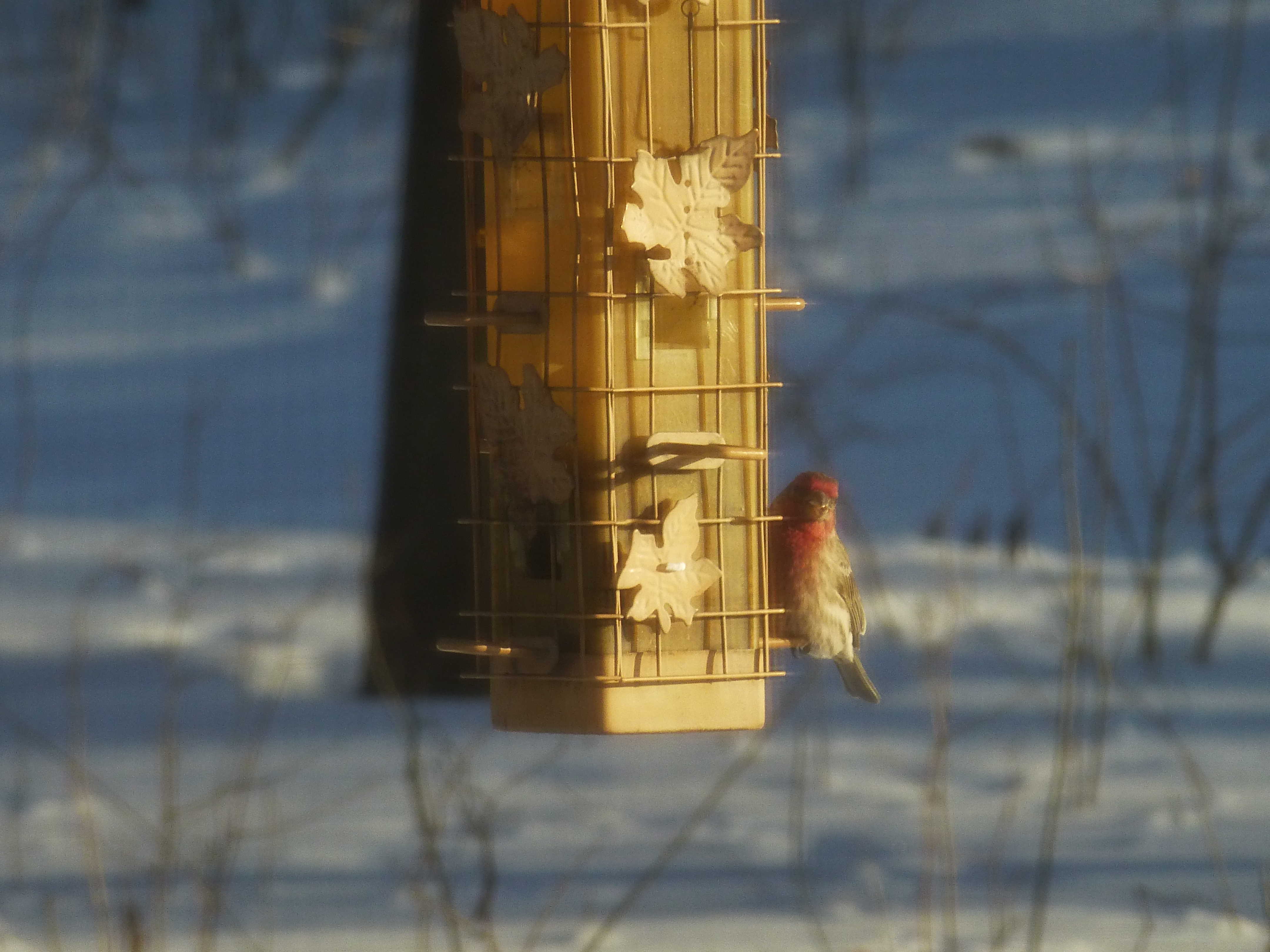
 The cold has settled in. The shadows lengthen as do the days. At the feeders the male house finches are beginning to show their mating colors.
Today is “Australia Day” in Australia. Like so many of our civic holidays here in North America, it is a difficult and complex event for Aboriginal people. This set me to thinking about recent conversations with friends.
We were hanging out, all of us of mixed European and Indian (Native American) ancestry. The conversation spun out in many directions before settling on resistance. It’s an old topic.
We are each more incorporated into the dominant culture than were our parents. None of us grew up anywhere close to The Res, although a couple of women spent time there as kids or teens. Others have established connections with their parents’ birth communities. We are well, even overly, educated. Some of us are Pan-Indian by default, others are more grounded in specific tribal traditions.
We share a love of the land and of the processes of nature. We also share a commitment to ceremony, small and large. We view the world as imbued with Presence, inviting prayer and gratitude. For us, the Earth is alive and breathtakingly, heartrendingly, beautiful. We believe the Holy Ones and ancestors walk with us, and we must do our best to live in a sacred manner.
Inevitably the conversation turns to acts of Resistance. For our grandparents, and for some of our parents, living and raising another generation was the ultimate act of resistance. For some, assimilation, even forced, was an opportunity to resist and survive. I have a bumper sticker on my car that says, “We are still here.” It refers to Polio survivors but for me has many other dimensions.
The folks sitting around the table resist the pull of the dominant, materialistic, individualistic culture in myriad ways. Still, we acknowledge we are much more assimilated than our parents. This is bitter-sweet. We have gained mobility and relative security, even as we have lost community and traditions. Someone jokes, “Resistance is futile. You will be assimilated,” and we wonder who coined that Star Trek phrase attributed to the Borg.
Resistance occurs on many fronts. Some of us write and/or make art about our struggles and those of our loved ones and communities. We are part of a long line of Indian women and men who have been “bad’, talking about live as we live it rather than presenting the happy or hopeless images of Indian people so loved by dominant media. All of us are of mixed heritage and have our own concerns and challenges that arise from that, meaning we frequently trouble the waters on both sides of the divide. For those of us without tribal affiliation the situation is even more thorny. All this gives us grist for our work.
Others are more politically active, deeply engaged in any number of issues; there is a tidal wave of suffering that threatens to overwhelm Indian country. The women note that at the very top of the heap is violence against Indian women. They point out that in North America Indian women are by far the most likely to be raped, murdered, or disappeared, and the crimes against them are least likely to be investigated. Given, that for us, women are the center of the world, the source from whom all life comes, savagery against women threatens our very identity. Protecting girls and women has long been an act of resistance.
I wonder whether I am alone in my experience that when I blog about these things, my readers don’t respond, often don’t seem even to read the post. I ask the group about their experiences. It turns out I am the only one who blogs. Yet my experience echoes through the lives of the others in many ways. We decide the best Indians are, in the view of many in the dominant culture, the strong silent ones. Maybe its just too painful to be reminded that the history of colonization is a road filled with immense suffering by Indigenous people.
Against my better judgement, a few days ago I tried to have this conversation with a group of shamans, on-line. They were talking about the use of the Term “Post-Tribal” to differentiate what they do from what we more tradition based types do. I pointed out that the term implies an end to tribal identities, the dream of many who would love to have us pass into history. It is a term of erasure. Predictably, I guess, the conversation went nowhere. That said, just opening the conversation was, for me, and act of resistance.
Words are vitally important, even sacred, to many Indigenous people for they create the world. Our parents and grandparents resisted assimilation by keeping alive, to the best of their ability, our customs, beliefs, and rituals, and by reminding us that words have great and sacred power. They encouraged us to live good lives, firmly rooted in the holy.
I’m looking for a way to end this post and finding a conclusion elusive. Perhaps this mirrors the reality that these things we’ve been speaking of are ongoing. There is no way to tie them up; there is no conclusion. There is only the living day-to-day, the nurturing of the next generations, and the wish to do so in a sacred manner.


Leave a reply to Mary Strong-Spaid Cancel reply