A cold, cloudy first morning of June, following a day of high wind and rain that took a toll on the gardens. Jennie’s response is to gather the remains and make beautiful boiled paper prints.
In spite of the wind Nori spent much of yesterday afternoon asleep on the cushions on the screen porch. The wind was predominantly from the west so the porch was mostly protected. That said, those nearly 50 mph gale force gusts were loud and more than a little threatening, so I watched her deep repose with surprise.
I’m fasting for a routine medical test so find myself hungry and grumpy. The test isn’t till tomorrow so I will simply have to slog through. I’m trying not to be too grumpy but so far with limited success.
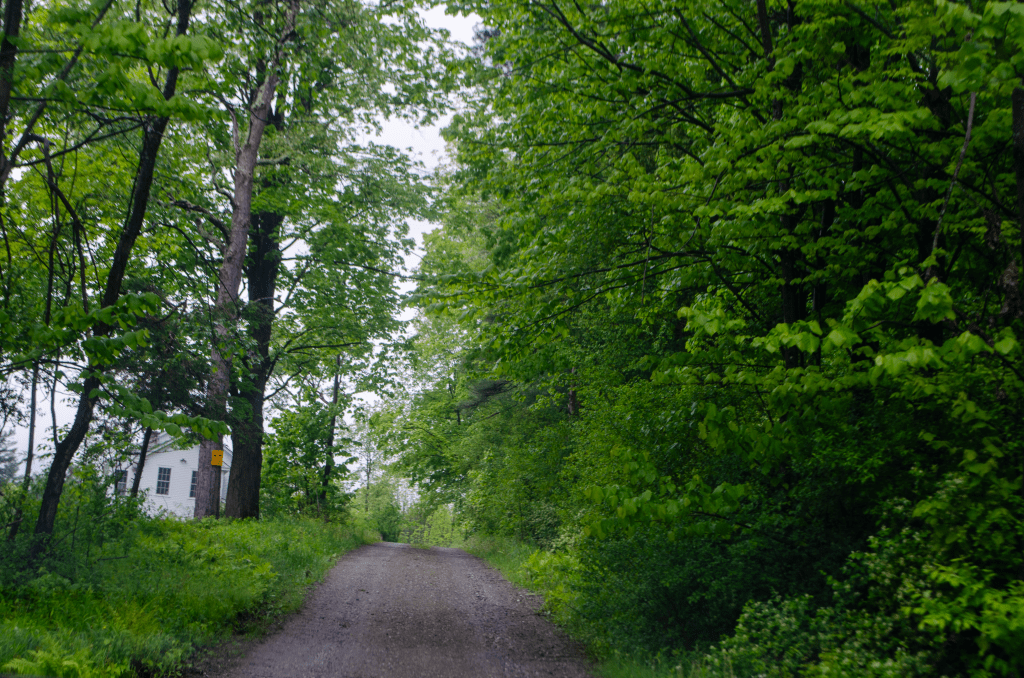
Now that the trees are fully leafed out I can barely see into the field so am wondering what I am missing. Summer here has a quality of closing end and of being sheltered, and sound can sometimes be more informative than vision. What is lost to view is more than made up for by the soundscape created by the wealth of birds that seek shelter in the trees and are drawn to our fountain.
Here we are well into the breeding season for birds and there is already a slight decrease in birdsong, a trend that will gather momentum as we approach the solstice. (Furter north summer migrants are still arriving!) By August an empty quiet will settle over the landscape, although our local birds, the ones who overwinter, may continue to sing. A few sing pretty much year round.
I’ve been reading May Sarton’s late journals and am struck by the volume of correspondence she kept. She reports that she spent $1300 for stamps in 1993, an astounding amount that reflects the hundreds of people with whom she exchanged letters. Some of those would be folks who sent notes about her influence in their lives, letters she would always try to answer, but the larger share were world-wide friendships, often life long.
Sarton had several strokes near the end of her life, as well as breast cancer and other serious illnesses, and often felt quite disabled. She reported ever declining levels of energy and would frequently write of being overwhelmed by everyday tasks, as well as the more gargantuan jobs associated with publishing. In spite of this, she continued to spend time with friends, give readings, garden, write, and publish.
At the end of her life Sarton often felt rejected by the literary world even though at one point she had thirty-three books in print and several pending publication. She was frequently deeply pained by hostile reviews and the absence of positive notice, and even as several biographies and films about her came out, saw herself as having failed to write a best seller and therefore as being a second rate writer. I know that in my life her relatively early book, Plant Dreaming Deep, was, and continues to be, profoundly influential.
How strange to read her self assessment now, three decades after her death, knowing her continuing influence on writers and artists. I guess we can truly never comprehend our impact on the world.


Leave a reply to Laurie Graves Cancel reply