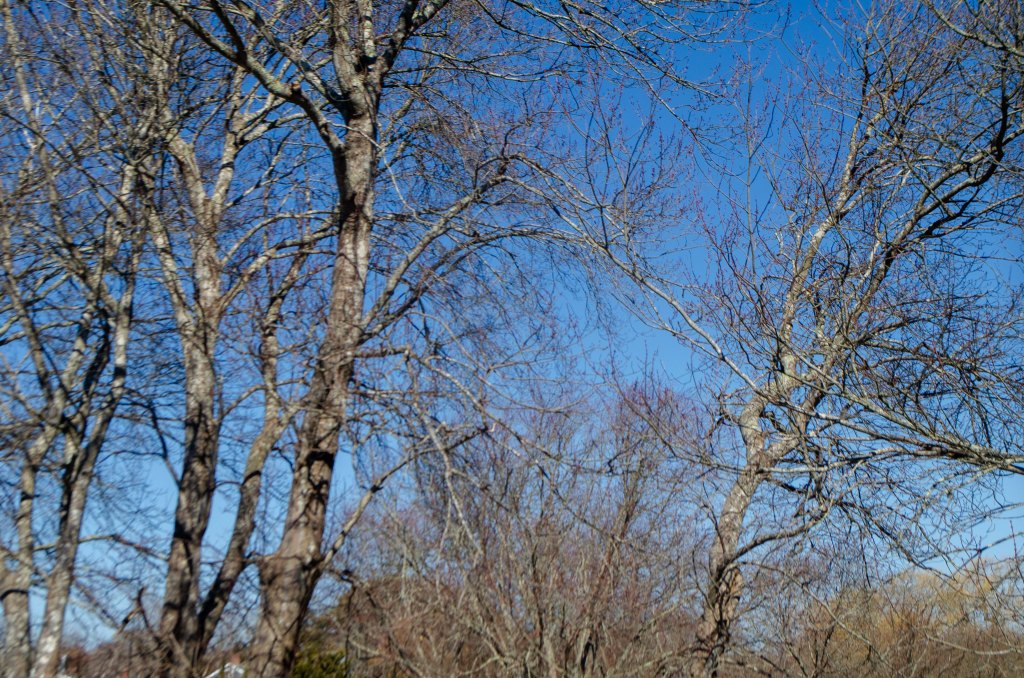
Today is another crystalline March day, somewhere between winter and spring. The Croci are coming into bloom and the daffodils are growing taller each day. Most days also bring more bird song as those birds that do not overwinter slowly filter in and the resident birds become more territorial. Yesterday we made it to the ice cream stand for the first taste of spring.
Lately I have found myself thinking about the similarities between the present moment and the fifties and early sixties. During that epoch in the U.S. the Cold War and the imminent threat of nuclear inhalation shaped the political and cultural landscape. There was fierce pressure on everyone to fit in and difference was magnified, punished or ignored. The World War had changed everything and nothing, and social turmoil stewed just under the surface. The society became harshly repressive in a failed effort to keep a lid on the forces demanding change.
In the mid-fifties a relatively safe and effective polio vaccine was found and administered, ending the yearly pandemics that terrorized much of the world. Here, the March of Dines, which was founded to fight polio, in spite of promises to support survivors, turned towards now more lucrative fund raising targets. In the public imagination, polio was gone and so were those of us who survived it, an erasure that would be repeated when veterans returned from the failed Vietnam war.
We polio survivors were taught that we were now to be normal (an impossibility) and to forget polio and move on with our lives. Parents were told not to talk with us about the experience of the illness or its ongoing impacts. For many of us there was literally no one to talk to and no way to process the devastation, a crazy making experience.
In my family, tragedy was acknowledged but quickly left behind. When my dad accidentally stepped on our pet Myna bird (she loved to sit with me and Tom the cat on the floor). There was a gut wrenching cracking noise that still reverberates in my mind; the bird died a short time later. Another time we had to move across country, and as was the practice at the time, my dad sadly gave away Tom, who had been my best, and sometimes only, friend since polio. He came home to report that Tom had bolted and was lost.
In keeping with the time, there was no recognition of the losses and no way to grieve. I lost two dear friends and there was literally no way, and no one, to talk to about the hurt. Losses ,even very recent ones, were in the past and we were to face forward.
The similarities between the plight of us polios and the fate of black people were to many and too obvious (we were both erased and told to go to the back of the metaphorical bus), and many polio survivors were active in the civil rights movement, and later, led the disability rights movement. It’s heart breaking to find the culture consciously returning to those repressive, frigid, days.
Several historians have postulated that the U.S. has long, recurring cycles that flux between self-focused greed and community focused generosity. In the greed part of the cycle things can get very bad, indeed, before the turn around. If history holds, we should be near the end of the cycle and the turn can be unforeseen and rather abrupt. Let’s hope so.


Please share your thoughts and join the conversation!