 Well, I inadvertently published this before it was ready. Here is the finished version.
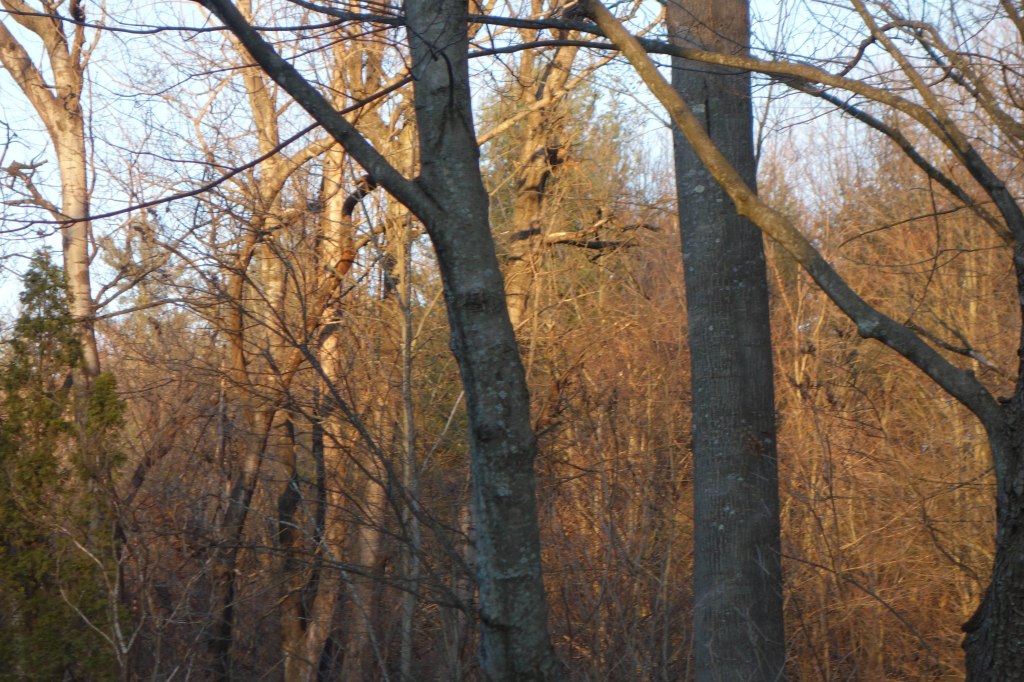
Yesterday began cloudy before settling into a brightly sunlit afternoon. Today is gray and chilly with rain on the way. Our snow and ice have largely disappeared although I am told it is still quite icy in the deep woods. Out back, the maples are showing bright red buds.
This has been a week of mostly back page news about the rapid decline of the natural world. Actually, not every species is in decline; there are many pathogenic bacteria and fungi, along with a host of plants and animals that do well in the presence of humans.
Much of this change is directly tied to climate change, and more broadly, to human overpopulation. It is simple ecology; there are only so many resources and their use changes ecosystems. Add to that our flooding of the environment with antibiotics, antifungals, and a myriad of chemicals and forms of radiation that act on the world in ways we do not understand, and we have a massive problem with ecosystem stress and collapse.
Sadly, we are linear creatures and it seems immensely difficult for us to simultaneously hold onto a large number of interconnected issues long enough to make a coherent plan of action. The worldwide influence of the neoliberal view of the world and of people as only resources for wealth creation makes our collective problems more intractable. .
I just had to say all that out loud. In a few weeks we will be off again to yet another psychotherapy conference, this one focused on psychodrama. Jennie and I will again be presenting on building platforms of inclusion as an antidote to the dominant ableist and colonial discourse that plagues the disciple of psychology.
Psychodrama occupies space somewhere on the boundaries of psychology and theatre, and as often happens in those liminal zones, struggles with actively wanting to purse a liberatory agenda within a Eurocentric, ableist frame of reference, one with deeply submerged colonial roots. Of course, this is a difficulty inherent in the effort to find language for change, one that catches me up all too often.
I like to imagine that despite the pitfalls, the arts offer pathways for complex thought about difficult problems, even as they can be used to create propaganda. Right now, as governments around the world become even more rejecting of basic human aspirations, the artistic landscape is becoming ever more diverse. What’s more, artists around the world are engaged in the project of creating a truly inclusive, vibrant cultural landscape, one that acknowledges the right of all beings, including the biosphere, to life.
What are the arts based social change practices you are engaged in or are drawn to? Which have brought you comfort, hope, or community?


Please share your thoughts and join the conversation!