
 Today the sky is grumpy and there is a welcome chill to the air. Here on our residential street Nature is celebrating summer’s abundance. The robin that set up housekeeping on our front porch is patrolling the garden during her time off the nest. Our sunflowers are in bloom and the goldfinches are noisily enjoying munching on them. A Monarch butterfly just flew past the office window, reminding me that we are seeing more Monarchs this year, and creating a moment of celebration in my heart.
Jennie and I are both interested in canals and went out of our way to seek them out on our recent trip. All around the eastern Great Lakes lie networks of canals that once connected the lakes with large, navigable rivers. We tend to forget that European settlers pushed west via water; later they exchanged goods with folks back east via the same routes.
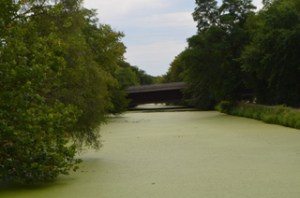
Just south of Chicago are the remains of the Illinois and Michigan Canal, which was operational from about 1848 to 1933. The canal, which is no longer navigable, runs roughly parallel to the Illinois river, and is credited with making Chicago the metropolis it has become.
One morning we stopped in a town park adjacent the canal and wandered briefly along the canal path. Nearby were several large, cut-out iron figures that paid tribute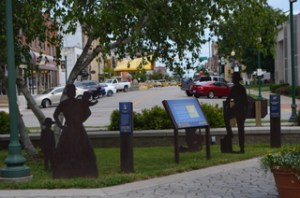 to the settlers who made their watery way to the area. Thankfully the display contained no historically inappropriate cut-outs of Natives in headdresses and loincloths. In fact, there were no Natives at all, which I found both predictable and disturbing. (Oddly, Chicago, just a few miles north and east, has a significant Native population, although they seem to remain invisible to most people in Illinois.)
Encountering the absence of Native people in the region’s many celebrations of identity, we were reminded that we humans have a tendency to simply erase others from our midst, our histories, and our memories. We even disown and “forget” members of our own families! Of course, psychologically and spiritually those we erase return in some way, often as hungry ghosts. It is less that the ousted individuals return, although they may, as that our inner and collective experiences of them return, and very often haunt us.
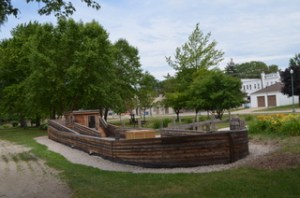 I wonder how much our country’s experience of, and responsibility for, the erasure of Natives, wolves, and passenger pigeons troubles our psyches and makes our task of caring for the world both more difficult to remember and more burdensome. Might it also be that our collective rejection of the ongoing effects of slavery and genocide fuels our country’s profound racism? (Let us not forget the theft of land from French and Spanish speaking peoples.)
I sometimes still have the experience of being a ghost, both invisible to and troubling of others. My experience of invisibility is hardly unique; rather, it is a common conversational thread among my friends who are Native, disabled, or, like me, both. It may also be the natural outcome of passing, which is itself is a response to the dangers that arise from being other.
Standing beside the remains of the canal, watching families play in the park and cyclists pedal along the bike trail, I took just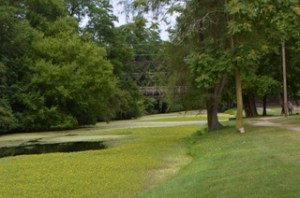 a minute or two to marvel at the richly nuanced experience of simply being in that place at that time. I found myself imagining that if we knew the history of the places we visit, live in, or otherwise encounter, we might find our lives enriched, troubled, and deepened in profound ways, and that we might even be more kind to one another.


Please share your thoughts and join the conversation!