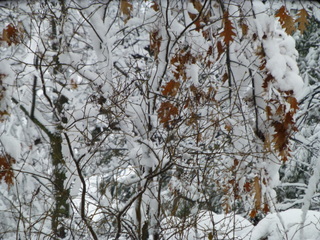
 It has been snowing, intermittently, for most of the past week. We have also experienced freezing rain, sleet, and, very briefly, just plain rain. It is warm, compared to the historical norm, resulting in the periods of mixed precipitation rather than just snow. Had it been all snow we would be housebound.
I’m sitting by the wood stove. It took a while to get it roaring; now the heat is finally taking the chill from the house. I appreciate the deep warmth that comes from burning wood, and the high-efficiency of this stove; we get warmth while using relatively little fuel. The dancing flames are a bonus.
My parents remembered the winter evenings of their youth, spent by open hearths, with fondness. Stoves and fire places were not efficient; they required many chords of wood be gathered, split, and stacked each year. Families carefully managed their lands, maintaining the health of the trees, water, and soil upon which their lives depended. To run out of wood for cooking and heat was to suffer, and in winter, to risk death. Gifted persons felt and respected the pulse of the land, dreaming the flow of energy and information through the biosphere; this helped them survive difficult times.
I believe most people sense the heartbeat and mood of the World in some way, perhaps unconsciously. As we are all connected to, and expressions of, Pachamama, the great being who lends us life, it makes sense we might know her moods and needs. Given we are her offspring, does it not make sense that we might feel her pain, that her suffering might also become our own? If indeed we share her anguish, surely our personal healing journeys must include addressing in some way the suffering of the Planet.
Increasingly, that pain finds its way into psychotherapy sessions and healing ceremonies. How often do we speak of feeling “torn, ripped open, exposed” by experiences in our lives? Aren’t these also descriptors for the effects of invasive extractive technologies? I was told by my teachers, and my dreams, that mining, quarrying, and drilling cause harm to the Planet, and that Pachamama feels these things as intensely painful. As a result, many Indigenous peoples of North America have evolved rules that strictly limit mining and other extractive technologies. Yet, these are not the values of the dominant culture, and there are increasingly few places left in the world where the skin of the Earth remains largely intact.
As the children of Pachamama, we are offered the task of caring for one another and the planet, and in so doing, showing our gratitude for our very lives. This is both a burden and a gift, a source of sorrow and joy. As we enter the heart of this sacred season, may we remember this. May we care deeply for all who are in harm’s way, and give gratitude and healing to our Mother, Pachamama.
In keeping with the theme of caring, I encourage you to visit A Holistic Journey’s series of posts about making a difference in difficult times. Holistic Wayfarer introduces the series with these words:
Though we may not be able to rescue everyone from cold, hunger, sickness, or loneliness, we can make a profound difference in so many ways. I name the stories you are about to hear the Candlelight Series after Eleanor Roosevelt who sought “to light candles rather than curse the darkness.” We’ll catch a glimpse of the hands that have lit the way for those frozen in the dark. Of people who chose to see the suffering and meet it with love, who decided they would be the right person to come along. People like the teachers and principal Dasani so desperately needs. We pay homage to those who helped us survive the night by candlelight.
Blessings.


Leave a reply to Gretchen Del Rio Cancel reply