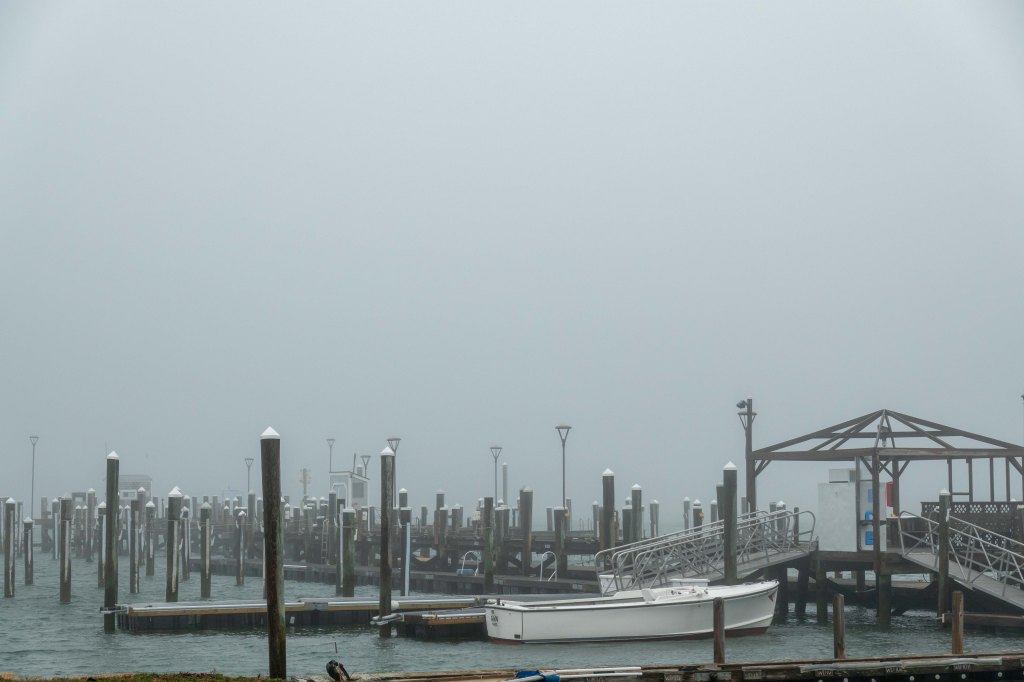
A cold, wet morning. Somehow, last night the Red Sox played at Fenway (baseball) with temperatures in the 30’sF, fog, mist, and drizzle. The players and the fans looked miserable, on top of which, the Sox lost. On the bright side, literally, the showers have brought on the daffodils and they are seemingly everywhere!
This morning I want to briefly revisit Vanessa Angelica Villarreal’s Magic Realism. The book is part memoir, part PhD research, and part literary theory. My understanding of her thesis is that Magic Realism is a literary form that arises from multigenerational trauma and is rooted in Indigenous acts of redefinition and resistance. It was a fitting read in a week in which Harriet Tubman was erased from Federal spaces that address the underground railroad, and the Supreme Court seemed to approve the disappearance of anyone the government doesn’t like.
For Villarreal Magic Realist thought and literature arises from the lived experiences of Indigenous people and encompasses both the horrors of everyday and multi-generational trauma and the magic of daily interactions with the non human selves who are deeply related to and with us. These selves reside in nature and the spirit world and often seek to connect with us. Such moments of connection arise as if by magic and are perhaps, most frequent during ceremony when we humans may be most open to them.
While settler colonial governments view narratives about everyday magic as evidence of Indigenous people’s superstition, childlikeness, and naivety, Indigenous writers understand these narratives to be acts of cultural and spiritual survival in which the world is alive and engaged with us, rather than a source of capital to be exploited as much as possible.
Magic realism, then, marks and explores the border between colonial violence and Indigenous cultural complexity, richness, and survivance, between an animate, awake, engaged world and a distant, non responsive world. Magic realist style literature that fails to address and critique the history of multigenerational, ongoing colonial violence is not Magic Realism. Rather, it is a form of erasure in which the violence and everyday magic of Indigenous lived experience is watered down, racialized, or ignored.
I suggest, and Villarreal might well agree, that much of the magic realist style literature that arose from the Holocaust, communist dictatorships, and other experiences of settler colonial violence are close relatives of Magic Realism but largely lack the multigenerational trauma and social critique that is crucial to Magic Realist narratives. In popular fiction I love much southern “magic realism” but also recognize that while it is fun fantasy, often socially engaged, it fails to resist the dominant cultural narratives of settler colonialism; this makes such fantasies dangerous. They are not Magic Realism.
How odd it seems, although perhaps not surprising, that Magic Realism is more current than ever.


Please share your thoughts and join the conversation!