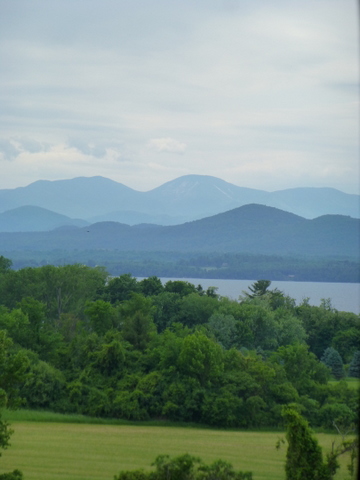
 Last night we were honored to be invited by our Abenaki brothers and sisters to drum as part of the opening ceremony at an all city meeting. The event was a Neighborhood Planning Assemblies meeting called to discuss the proposed development of a large lakefront parcel of land presently owned by a local nonprofit educational institution. The current proposal would place about 700 housing units on prime recreational open space, and is drawing considerable opposition even before the land sells.
Prior to being “owned” by the nonprofit, the building and grounds had been a large orphanage owned and administered by a major religious order. Over its nearly 100 years in operation, the orphanage built an almost incomprehensible history of abuse. During the 1980’s I was part of the legal team that represented about 80 adults who had been victimized at the orphanage as children. Over three years a colleague and I listened to the stories of these courageous people, and supported them as best we were able, as they faced an angry public. Sadly, their court cases were dismissed due to an expired statute of limitations. Back then, few people in the community believed their terrifying stories of abuse. As in many communities, that would change. Later, a few former residents of the orphanage received large settlements from the church.
Four or five years ago, when the nonprofit bought the land and buildings, they asked me to come and work with the distressed spirits of the place. With the aid of many other people, we were able to bring a modicum of ease to the spirits. Part of the agreement with the spirits was that the staff of the institution would pay attention to their needs and concerns. Sadly, that proved not to be a priority for the nonprofit and the spirits were soon abandoned.
Last night, as I listed to panelists, and persons from the community, share their concerns about the proposed development, I thought about these things. Several Abenaki spoke to their love of, and stewardship responsibilities to, the land, and their fears that development would further degrade the lake and nearby wetlands. I was reminded that a disproportionate number of the children at the orphanage had been Native. Although one panelist had presented a brief history of the post settler occupation of the land, including the legal issues that arose concerning the orphanage, there was no direct reference to the horrific abuse that had taken place there.
I found myself facing a conundrum. My policy is not to speak about the work I do, yet to refuse to speak would do a disservice to those who had suffered so greatly at the orphanage. Thus I found myself very briefly addressing the gathering, simply reminding them that we must not forget, however we, as a community, might wish to, the terrible suffering that took place on that land. To forget would dishonor the spirits of those who survived, and those who did not.
After the meeting I was chatting with a few people when one of the would-be developers came up and began speaking with one of the folks in our small circle. His comment, loaded with dismissal, was, “I do not need to go to church on Sunday. Being here was like attending church.” There was great irony in that comment. For us Native people, as well as for many others in the room, the land is our church. Also, the essential back-story to our discussion is the unimaginable violence perpetrated in the name of the church, violence that seems likely to be next turned against the land.
Looking back over my time with the survivors of the orphanage, I am reminded of how often they spoke of their love of the open woods, and fields that surround the orphanage. That land was their sanctuary, a place to feel close to the Creator and to momentarily escape beatings, rapes, and solitary confinement. For many of them, as for many of the community members who attended last night’s meeting, the land was, and remains holy.


Please share your thoughts and join the conversation!