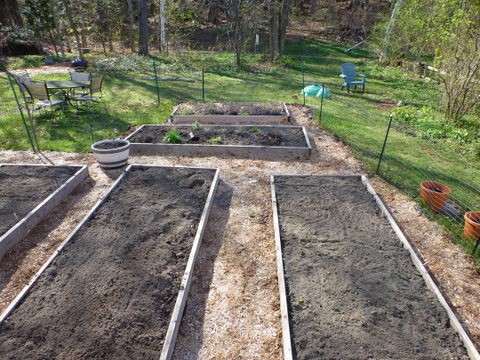
 Today is Mothers’ Day in the U.S., and the weather has turned warm enough for me to go barefooted in the house. The afternoons are even warm outdoors. This morning Jennie began putting in our kitchen garden. Even as we welcome this time of growth and the promise of abundance, I am troubled by events of recent weeks.
A few weeks ago Jennie and I experienced a difficult moment when a liberal European man addressed us with a slightly digging comment about Indians. He had no idea he might offend us; after all, I look European. The comment was not egregious, yet it stung. The mental health term for such comments is “micro-aggressions”. Such statements mount up and crowd the mind and psyche of persons. They are particularly damaging to young people and elders.
The other night we attended an event recognizing Burlington’s large immigrant population. The evening took place at our synagogue, and featured music, dance, food, and poetry from around the world. There was also European American folk music as well as Gospel. Afterwards we had a brief conversation with the rabbi, in which we asked about the absence of any acknowledgement of Native America. The rabbi, who is a good and openhearted man, and who is deeply committed to social justice, gave two reasons: the evening was dedicated to immigrants, and Native America had been acknowledged at the Thanksgiving celebration we missed. The rabbi also acknowledged the “loneliness” created by exclusion. I appreciate his acknowledging my loneliness and pain, and I had to admit that, yes, Europeans are immigrants. I was not convinced there was ever a good reason to fail to acknowledge Native American and First Nations peoples, nor that a single song at Thanksgiving constituted acknowledgement.
As I have written frequently, the all too familiar loneliness and sense of exclusion underlies my experiences at the local Unitarian church, where Jennie sings in the choir. Just about the only times Native America is acknowledged are when Indian texts in translation are used, always without context, or when there is a Native themed service, usually without Indian participation. There is a consistent attitude that we Indians are long dead and gone, with the possible exception of some folks far away on Western reserves. For all their professed commitment to social engagement, the congregants, and a series of pastors, have refused to acknowledge the ongoing challenges facing Native America. I find sitting through services which pointedly ignore Native experience too painful for words.
Yesterday a group of self appointed armed vigilantes drove their ATVs through restricted Utah canyon lands that contain Native American burial grounds, sacred sites, and ruins. All of the above are fragile and susceptible to damage from ATVs. Brian Maffly wrote the following in the Salt Lake Tribune:
Blanding • Fed up with federal control over lands their families have used for generations, Blanding residents along with out-of-town supporters on Saturday drove all-terrain vehicles into Recapture Canyon, an area rich in prehistoric sites the Bureau of Land Management closed to motorized use seven years ago.
San Juan County Commissioner Phil Lyman, acting, he said, as a private citizen, organized the ride. It commenced with a rally in Blanding’s Centennial Park protesting what he and more than 200 supporters call federal “overreach” into local jurisdiction. Prompting the protest was BLM’s failure to process San Juan County’s applications for ATV rights-of-way in Recapture, although resentment toward the federal agency here runs much deeper and wider than the canyon that parallels Blanding a few miles to the east.
Part of a broad backlash against federal land management across the West, the ATV protest has attracted out-of-state activists eager to denounce federal authority over public lands. Some came decked in military camouflage and sidearms slung on their thighs. Militiamen approached by The Tribune declined to be interviewed….. Read More
Armed Europeans driving ATVs on Native sacred ground is symbolic of the worst in settler aggression and racism. It is a version of the Klan’s burning of crosses on the lawns of Native families in the Midwest during my dad’s youth.
The same sense of settler privileged and, perhaps, anxiety, have long been evident here in Progressive Vermont. During the past few weeks I have had several conversations with clinicians and healers about the struggles of our local Abenaki communities. Abenaki folk have long been at the mercy of sate and local governmental whim. The state’s actions have included forced sterilization during the Eugenics movement, abuse of Native children at St. Joseph’s orphanage here in Burlington, and systemic disruptions to traditional subsistence hunting and fishing. As is so often the case in North America, Abenaki families face high levels of substance abuse, child abuse, domestic violence, and suicide. There are many forces contributing to this, including multigenerational trauma and multigenerational patterns of “passing” that leave young people confused about their identity. Confounding the problem is the attitude of some other Native people that Vermont Abenaki are not “real” Indians, having forgotten or given up much tradition. Further amplifying their suffering is the near blanket refusal of mental health and educational providers to acknowledge the existence of Abenaki families and communities, or the problems of multigenerational trauma and ongoing local racism.
Racism in general, and micro-aggrssion in particular, have a devastating impact on the young and on elders. In Native American tradition the safekeeping of the young and our elders is our most important task after our caring for our Mother the Earth. In order to care for the people we are told to think things forward seven generations, to honor difference, to hold children and elders safely close to us, and to carefully tend the environment. Our collective refusal to do these things threatens all of the world’s children and disrespects the heart and wisdom of elders. On this Mothers’ Day, let us remember we are all here to honor and protect the children and the wisdom keepers, the elders, no matter their ethnicity or gender, and, thus, to nurture the future. Let us also remember and honor the women of the world, and our Mother, the Earth, who loans us our bodies, cares for us, and welcomes our bodies home when we no longer need them.


Please share your thoughts and join the conversation!